The side eye emoji — 😒, 👀, or 🙄 — rarely means what the dictionary says it does. The contextual nuance is everything: the same visual payload reads as a low-key flirt in a DM, a career liability on Slack, and an outright declaration of war in a group chat. Here's how to read every situation correctly.
The 😒 emoji meaning cuts deeper than it looks — that flat, sideways glare communicates instant disapproval, unbothered skepticism, or quiet irritation without a single word. Whether you're decoding what this emoji means in a text from your crush, clocking its flirty side-eye energy in a DM, or just confirming what the side eye emoji really signals in context, it's universally understood as the face you make when someone tries you — and you're simply not impressed.
Is That 😒 After a Compliment Flirty or a Full Rejection?
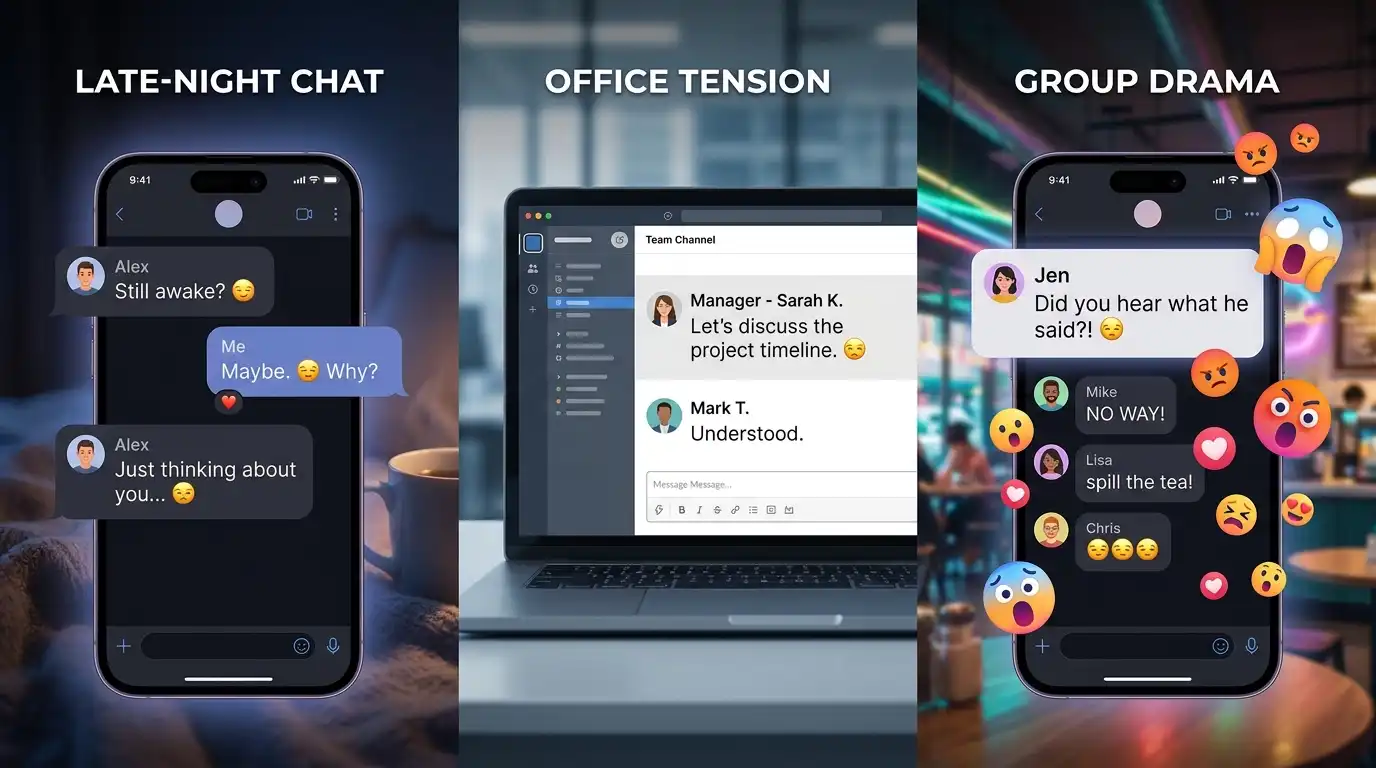
Late-night DM, someone says "you looked amazing tonight" and follows with 😒 — that's not cold, that's a tease. Gen-Z deploys this emoji as a playful deflect in romantic contexts, especially paired with a smirk. The danger surfaces when the receiver doesn't share that ironic lens and reads it as disinterest. One misread, and the convo dies before it starts.
Verdict: Ambiguous
😒 at Work: The Silent Career Risk Most People Overlook
Power dynamics completely reframe this emoji's social friction. From a friend, it's harmless banter — from a manager on Teams or Slack, it signals quiet disapproval without a single typed word. The real issue? Unlike a neutral thumbs-up, 😒 carries enough visual payload to land in an HR screenshot. And here's the hard truth: there is no "sparingly safe" mode for this in a professional thread. A blank reaction beats it every time.
Verdict: Risky
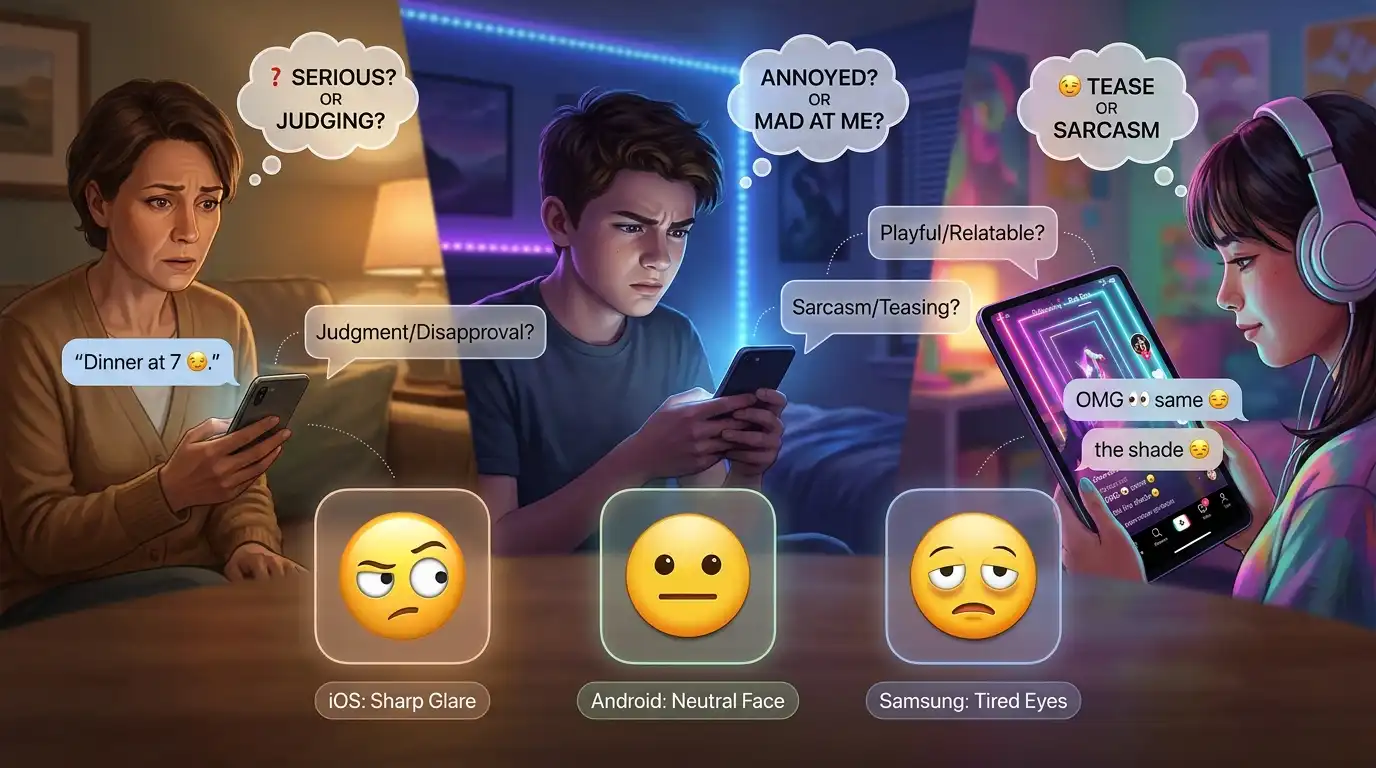
Platform | Visual Rendering | Tone Impact (US/Canada) |
|---|---|---|
Google/Android | Flat, neutral eyes | Passive Disbelief (6/10) |
Apple (iOS 18) | Sharp, 180° horizontal glare | Active Judgment (9/10) |
Samsung (One UI) | Droopy, heavy lids | Digital Fatigue/Exhaustion (4/10) |
Platform rendering isn't trivial — an iOS 😒 hits measurably harder than its Android counterpart, and that gap matters when your team runs mixed devices.
Dropping 😒 in a Group Chat After Drama? Read This First.
A single 😒 after someone's ex gets brought up isn't casual — it's a public verdict. Reddit users consistently flag it as coded shade: the emoji quietly delivers "knew that would happen" without a single word typed. That same character in a private DM stays contained, landing as a shared joke between two people. The venue changes the blast radius entirely.
Verdict: Shady
On TikTok, 😒👀 Doesn't Mean What You Think It Means
Gen-Z has fully remixed 👀 from surveillance to invitation — "spill the tea, I'm watching." A comment like "this is mid 😒👀" on a viral video isn't hostility; it's engaged irony with its own internal grammar. For anyone outside that generational code, it scans as mockery. Cross-age group chats are where this contextual nuance misfires hardest.
Verdict: Pure Vibes
Parents vs. Kids — Same Emoji, Completely Different Argument
A parent texting "Dinner at 7 😒" after being ignored thinks they're signaling mild irritation — a digital sigh. Their kid reads it as guilt-tripping and escalates defensively. Neither is wrong; they're running entirely different emoji dictionaries. This generational gap quietly generates more social friction than any directly typed word ever could.
Verdict: Low-key Dangerous
The Clarity Marker 😒 in Neurodivergent Texting
In US and Canadian ADHD/Autistic communities, 😒 frequently functions as a Tone Tag. It removes ambiguity by anchoring a sarcastic or skeptical sentence, ensuring the reader doesn't have to guess intent. It's not just shade — it's a tool for accessible communication. For many neurodivergent users, this emoji isn't throwing shade; it's precision in a high-context digital environment where tone is notoriously slippery.
Ultimately, the side eye (😒) is the most powerful silence we have in a noisy digital world. Whether it's a midnight DM or a high-stakes Slack thread, remember: your emoji choice is a silent weapon. Use it to protect your peace, not just to throw shade. The social risk is just one tap away.
Have you ever had a 😒 backfire on you? Drop your most awkward story in the comments below!
Heart Eyes 😍 vs Side Eye 😒
Where the heart eyes emoji showers someone with open, unfiltered admiration, the side eye emoji quietly serves skepticism and shade — one says "I'm completely obsessed," while the other says "I'm not buying it for a second